Ammonite fossil
This is the fossil of ammonites. Ammonites are an extinct marine cephalopod mollusk related to modern octopus, squid and nautilus. The most notable feature of ammonites is its flat-spun outer shell with tight spiral curls. This shell is not only their shelter, but also controls buoyancy by adjusting the internal air chamber like modern nautilus. They first appeared in the Triassic period about 0.24 billion years ago and became extinct with the dinosaurs at the end of the Cretaceous period (about 66 million years ago). The ammonite evolves extremely quickly and is widely distributed, so it is a very important "standard fossil" in geology ".

The specimen of Tyrannosaurus rex fossil at the Vienna Museum of Natural History
Tyrannosaurus belongs to the Tyrannosaurus genus of the Tyrannosauridae superfamily and is the only species in this genus. It was named in 1905 by American paleontologist and member of the American Academy of Arts and Sciences, Henry Osborne. If we refer to the translation format of other dinosaur species, it would be more appropriate to translate its species name as' King Tyrannosaurus'. Adult Tyrannosaurus rex is about 12 meters long and weighs around 7 tons, making it one of the largest land predators in Earth's history. This specimen fossil is currently preserved at the Vienna Museum of Natural History.

Fossil specimens of Southern Ape skulls from the Oxford Museum of Natural History
Southern apes, some researchers refer to as hominids, lived on the newly formed African savannah 1.5 million years ago. The skull features of this species are related to a diet primarily based on hard fruits, bark, and some roots. We can notice that it has a thick and protruding zygomatic arch, with a very large muscle passing through it and ending at the sagittal crest located in the upper part of the skull. Its dental arch is very sturdy and can be seen in very wide and pointed molars.

Fossil specimen of saber toothed tiger skeleton at Vienna Natural History Museum
The saber toothed tiger is a carnivorous mammal belonging to the genus saber toothed tiger in the order Felidae. The saber toothed tiger was once widely distributed on the continents of Asia, Europe, and America. It appeared in the Oligocene 35 million years ago and became extinct in the Pleistocene one million years ago. Their living period was during the Quaternary glacial period, when herbivores were slow-moving and easily hunted. But the ice age has ended, and cold resistant large herbivores cannot adapt to climate change and migrate northward, dying due to insufficient food. The saber toothed tiger lost its food source, did not have an advantage in hunting, and even became a prey for humans. In the end, it could only go extinct with the extinction of large thick skinned animals.

Fossils of terror beasts, fossil specimens from the Vienna Museum of Natural History
The scientific name of the terror beast is Deinoterium, which means "terrifying beast". The terror beast belongs to the mammalian phylum, long nosed order, and terror beast family. The terror beast is a huge proboscid animal, with some individuals reaching a height of up to 5 meters, making it the third largest known terrestrial mammal to have existed. The lower jaw of the terror beast has a pair of long fangs that curve downwards and backwards, without the upper fangs found in other long nosed animals. The terror beasts appeared in the Miocene and lived until the early Pleistocene. Fossils of terror beasts have been found in all major excavation sites in East Africa, including Hadar, Letoli, Olduvai Gorge, and Lake Turkana.

Fossil specimen "Robust Southern Ape Skull" from the National Museum of Anthropology in Mexico
The robust Southern Ape, referred to by some researchers as the hominid genus, lived on the newly formed African savannah 1.5 million years ago. Unlike the more elegant southern apes, the skull features of this species are related to a diet primarily based on hard fruits, bark, and some roots. We can notice that it has a thick and protruding zygomatic arch, with a very large muscle passing through it and ending at the sagittal crest located in the upper part of the skull. Its dental arch is very sturdy and can be seen in very wide and pointed molars. This specimen was discovered by scientist Robert Bloom in 1938 in the Stekefontein Cave near Johannesburg, South Africa.

Popular Models
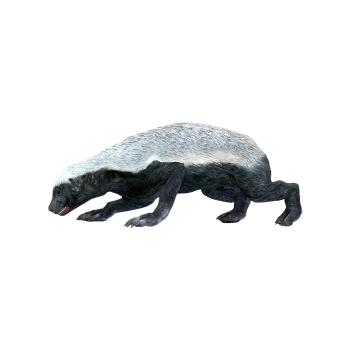
Honey Badger (3D animated model)
192 View
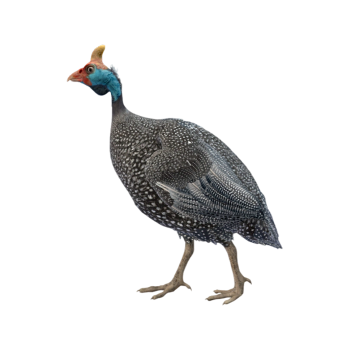
Guinea fowl (3D animated model)
163 View
Wild Goose (3D animated model)
185 View
Red Fox (3D animated model)
153 View
Random Model
Inca Carrot 3D Model
994 View

Stainless Steel Public Seat 3D Model
969 View




Bronze statue of Napoleon the Great
4777 View

Nanman Screen - Kobe City Museum
956 View